
2240 words 8 minute read - Let’s do this!
Well, October is underway, and the freight market has apparently decided that being unpredictable is now a full-time job. September just delivered record-breaking U.S. container imports, artificial intelligence is reshaping global trade in ways nobody could have predicted a few years ago, airfreight customers are rewriting the rules on how they purchase capacity, and North American cross-border freight is sending some very different signals depending on the industry. And here's what makes this week particularly interesting: some of the biggest developments aren't necessarily about congestion, vessel delays or fuel prices. They're about what we're shipping, where it's coming from and how transportation buyers are adapting to a market that refuses to follow traditional patterns. Let's get into it.
Remember all those predictions about an early peak season leaving September relatively quiet? Well, September apparently had other plans. New data released this morning by Descartes Systems Group shows U.S. containerized imports reached approximately 2.55 million TEUs in September, increasing 10.3% from September 2025 and setting a new record for the month. But here's the really interesting part: imports from China surged 21.2% year over year, reaching 924,454 TEUs and representing approximately 36.3% of total U.S. container imports. That's a significant development considering how much attention has been focused on shifting sourcing strategies, tariffs and companies attempting to diversify away from China. Categories driving the increase included furniture, bedding, plastic products, toys and sporting goods — exactly the kinds of merchandise retailers need moving into the holiday shopping season. And the bigger picture is worth considering. Despite September's impressive performance, total U.S. container imports through the first nine months of 2026 are only 0.8% above the same period last year. In other words, we're not necessarily experiencing an evenly growing import market. We're seeing dramatic swings in timing, sourcing and inventory replenishment that can make individual months look completely different from the broader annual trend. That's important because transportation networks don't operate on annual averages. They operate on the freight showing up this week.
What It Means for Shippers
Don't assume the traditional peak-season calendar is a reliable planning tool anymore. Strong September arrivals will continue working their way through terminals, warehouses, distribution centers and inland transportation networks well into October. Watch actual container availability, confirm receiving capacity and plan inland transportation around realistic cargo flow rather than historical seasonal expectations. The calendar may say post-peak, but the freight hasn't necessarily gotten the message.
Here's a story we probably wouldn't have expected to dominate a logistics newsletter five years ago: artificial intelligence is helping hold up global merchandise trade. The World Trade Organization released a major forecast update this week, raising its projected global merchandise trade growth for 2026 to 3.9%, compared with its earlier forecast of just 1.9%. The organization also expects growth of 4.1% in 2027. What's driving that surprisingly strong outlook? A massive surge in demand for AI-related equipment. According to the WTO, trade in AI-enabling goods, including semiconductors, servers and equipment used in data centers, increased an astonishing 67% year over year during the first half of 2026. Even more remarkable, those products accounted for approximately 47% of the growth in global merchandise trade during that period. Think about that for a second. Nearly half of global merchandise trade growth came from products supporting artificial intelligence. And we're not simply talking about computer chips arriving in small boxes. The construction of massive data centers requires electrical equipment, cooling systems, generators, transformers, specialized machinery and substantial amounts of supporting infrastructure. That creates demand across multiple transportation sectors, from high-value air cargo and containerized electronics to heavy-haul trucking, specialized flatbeds and project logistics. It also helps explain why some industrial freight markets remain remarkably active even when traditional consumer-goods demand appears uneven. There is a caution, however. The WTO notes that global trade growth is becoming increasingly dependent on continued AI investment. If spending slows, the impact could extend well beyond the technology industry.
What It Means for Shippers
Pay attention to the commodities driving freight demand, not just the total volume moving through the network. AI infrastructure is creating competition for specialized transportation equipment, high-value cargo capacity and project logistics expertise. Shippers moving electrical equipment, industrial machinery or oversized components should secure specialized capacity early, particularly when deliveries are tied to construction schedules. The next capacity squeeze might not come from holiday merchandise. It might come from a data center.
The global airfreight market is delivering another surprise, and this time the most interesting story isn't simply that rates are increasing. According to the latest Xeneta data, worldwide air cargo demand increased 6% year over year in September, following similarly strong growth in August. Available capacity, however, increased only 2%. When demand grows three times faster than capacity, pricing tends to notice. Global air cargo spot rates averaged approximately $3.10 per kilogram in September, 27% higher than a year earlier. Northeast Asia-to-North America rates reached approximately $6.03 per kilogram, increasing 5% from August. But here's where things get particularly interesting: shippers are fundamentally changing how they buy airfreight. Xeneta reports that 60% of new airfreight contracts beginning during the third quarter were for three months or less. One year earlier, that figure was only 25%. That's a remarkable change in purchasing behavior. Instead of committing to long-term fixed rates, transportation buyers are increasingly choosing shorter agreements or pricing mechanisms that adjust with market conditions. Why? Because nobody wants to lock in an expensive annual rate only to watch the market soften — but nobody wants to lose access to critical capacity if rates climb either. The shift reflects a market where flexibility has become almost as valuable as price. And there's another development worth watching. Chinese e-commerce exports to Europe fell 40% year over year in August following changes to European customs duties, while comparable exports to the United States increased 17%. Different trade policies are creating dramatically different air cargo demand patterns.
What It Means for Shippers
If airfreight is part of your transportation strategy, review how your capacity agreements are structured. Shorter contracts may provide flexibility, but they can also expose shippers to sudden increases when space tightens. Consider combining committed capacity for predictable freight with flexible pricing for variable demand. For urgent shipments, remember that the lowest rate isn't much of a bargain if the cargo misses its required delivery window. Reliability still deserves a seat at the negotiating table.
Cross-border freight is becoming one of the more interesting parts of the North American transportation market, particularly when you compare Mexico's growing importance in manufacturing with the challenges facing specific industries. New U.S. trade figures released this week show American imports reached a record $420.8 billion in August, increasing 4.3% from July. The overall U.S. trade deficit widened to $105.6 billion, the largest since March 2025. Capital goods imports were particularly strong, reaching a record $146.4 billion, supported by industrial machinery, semiconductors and other equipment tied to business investment. But the trade relationships underneath those numbers are changing. The United States recorded particularly large goods trade deficits with Mexico, Vietnam and Malaysia, highlighting the importance of manufacturing and sourcing networks beyond China. At the same time, Mexico's automotive industry is experiencing a significant slowdown. New figures released Thursday show Mexican vehicle exports fell approximately 12% in September, while vehicle production declined around 15%. Tariff uncertainty and changing manufacturing economics are creating challenges for automakers that depend heavily on the U.S. market. That creates an interesting contradiction: North American cross-border trade can remain strong overall while individual industries experience significant declines. And for transportation providers, the distinction matters. Electronics, industrial equipment and manufacturing components may be generating additional freight demand even as automotive shipments weaken. Different commodities require different equipment, different border procedures and different transportation schedules. There's also a capacity issue developing. Industry market reports indicate that restrictions affecting some Mexican cross-border drivers have reduced the pool of available qualified drivers, even while overall trade volumes remain relatively stable.
What It Means for Shippers
Don't treat cross-border transportation as one uniform market. A slowdown in automotive exports doesn't necessarily mean capacity is readily available for electronics, industrial machinery or other growing commodities. Review carrier qualifications, customs documentation, border crossing requirements and equipment availability before committing to delivery schedules. For companies sourcing from multiple countries, landed cost and transportation reliability should carry just as much weight as the manufacturing price.
One final development deserves attention because it helps explain why the transportation market continues to feel so contradictory. Global shipping and logistics companies are heading into third-quarter earnings season with expectations for strong financial performance, supported by resilient trade volumes and elevated transportation rates. Ocean carriers have benefited particularly from higher freight pricing, with several major operators improving their financial outlooks during 2026. But here's the distinction: higher freight rates don't necessarily mean the entire logistics industry is enjoying the same financial benefits. Freight forwarders, brokers and transportation providers operate under very different cost structures. Rising ocean rates can improve carrier revenue while simultaneously creating more expensive and complicated transportation decisions for customers. Meanwhile, demand for customs clearance, warehousing, insurance, transloading and other specialized logistics services continues growing as companies work to manage increasingly complicated supply chains. In other words, logistics is becoming more valuable precisely because logistics is becoming more difficult. And that's an important shift. A shipper doesn't simply need somebody to book a container anymore. They need someone who understands routing alternatives, inland capacity, customs requirements, inventory timing and the financial consequences when one part of the transportation plan stops working.
What It Means for Shippers
Evaluate transportation partners on more than the initial rate quotation. Visibility, operational experience, responsiveness and access to multiple transportation solutions can have a measurable impact on total landed cost. When the market is unpredictable, the cheapest provider isn't always the most economical partner. Sometimes the greatest savings come from avoiding the problem before it becomes an expensive one.
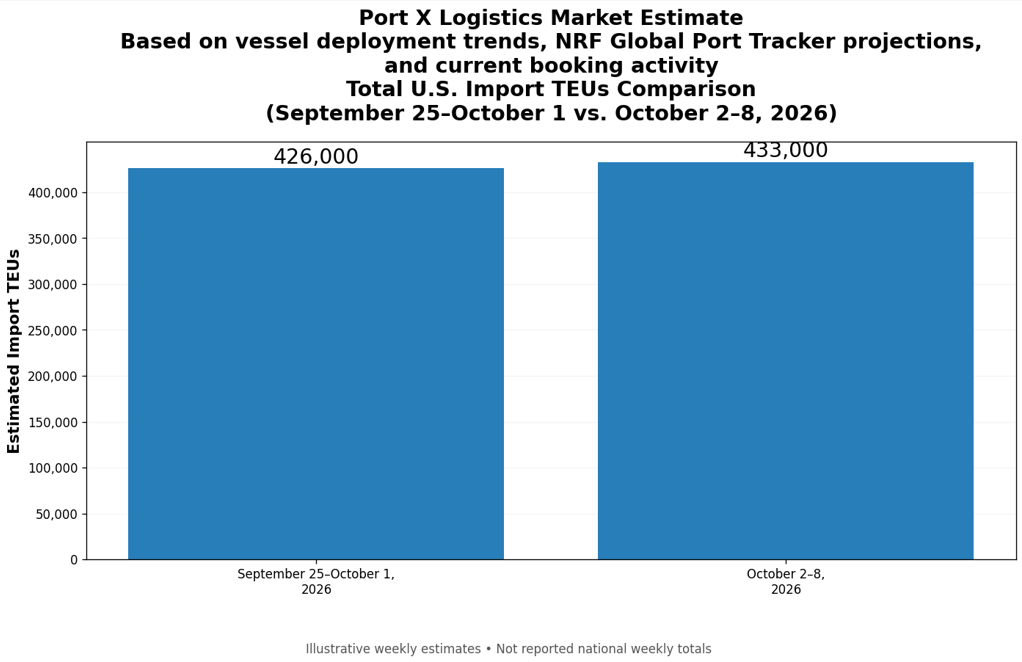
TEU volumes went up 1.18% over last week, with majority coming into New York/New Jersey 15.6%, Los Angeles 18.3% and Long Beach 15%
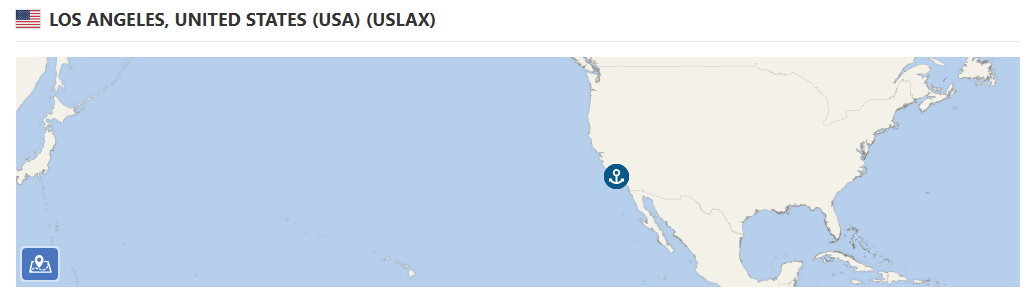
What’s happening at the ports and rails?: LA/LGB: Los Angeles and Long Beach are looking beyond today's cargo volumes and focusing on the rail infrastructure that keeps containers moving inland. On October 8, the Los Angeles Harbor Commission is scheduled to consider a new 10-year operating agreement with Alameda Belt Line, with options to extend the arrangement through 2048. The agreement would support rail movements between marine terminals, connections with BNSF and Union Pacific, train dispatching and ongoing infrastructure maintenance. A companion agreement is also anticipated at Long Beach. While it may sound like routine port business, the bigger story is how the nation's busiest container gateway keeps its inland rail connections reliable as freight volumes and transportation demands evolve. Moving containers efficiently through the ports is only part of the equation. Maintaining the rail network that connects those containers to the rest of the country is just as important.
What It Means for Shippers
This isn't an immediate capacity expansion or a guaranteed reduction in rail dwell, but it reinforces the importance of long-term rail reliability at LA/LB. Shippers moving freight inland should continue monitoring rail availability, departure schedules and alternative transportation options. A stronger rail network is good news, but flexibility between rail, transloading and trucking remains essential when timing matters.
The West Coast doesn't slow down, and neither does Port X! 🚛 From busy terminals and shifting appointments to those last-minute surprises that seem to come with every container, our LA/LB team knows how to keep freight moving. With competitive transload rates, secure yard space, flexible storage and real-time OpenTrack visibility, we're giving shippers more options and fewer headaches. Add in our No Demurrage Guarantee with 72-hour dispatch, and you've got a team that's focused on getting containers out, costs under control and deliveries back on track. Whether it's a straightforward dray or a complicated transload, we've got the experience, flexibility and hustle to get it done. Less waiting. More moving. And a whole lot less “where's my container?” energy. 😂 Have freight coming through Los Angeles or Long Beach? Let's put a better plan in motion! letsgetrolling@portxlogistics.com
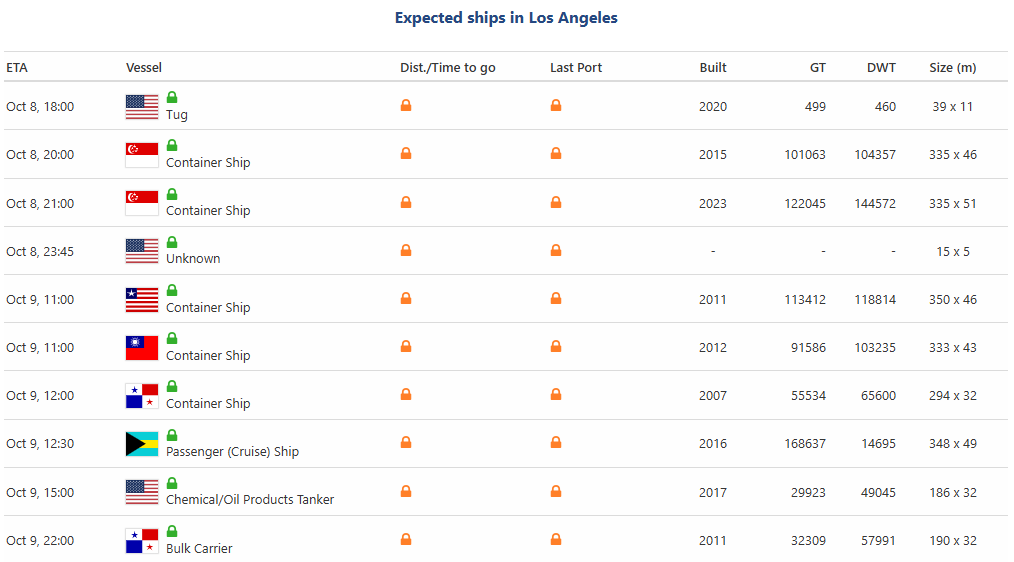
Did You Know? The U.S. container market is getting a little crowded — and we're not just talking about the ports! With import volumes remaining strong, drayage capacity tightening and fewer available over-the-road trucks, the real challenge is becoming what happens AFTER the container arrives. Terminal appointments, chassis availability, transload warehouse space and outbound trucking all have to line up to keep freight moving. And when one piece of that puzzle falls behind, delays and additional costs can add up quickly. With tighter driver availability, rising operating costs and unpredictable container arrivals, last-minute transportation planning is becoming a whole lot more complicated. That's where Port X comes in! Our nationwide drayage network, transloading capabilities, flexible storage solutions and experienced transportation teams help shippers stay ahead of the crunch instead of getting caught in it. From port pickup to warehouse handling and final delivery, we're connecting the dots so your freight doesn't get stuck between them. Capacity is getting tighter, but your options don't have to! Have containers on the way? Let's get ahead of them before everyone else starts looking for a truck. Email letsgetrolling@portxlogistics.com and let's get rolling!