
1857 words 7.5 minute read - Let’s do this!
We're heading into the middle of November, and the freight industry certainly isn't easing quietly into the holidays! From another twist in West Coast labor negotiations to changing ocean rates, shifting import forecasts and rising transportation costs, there's plenty keeping supply chain professionals on their toes. The good news? Not every development is another disruption. Some important improvements are emerging, including additional Panama Canal capacity and temporary relief from a potentially significant port strike. But there's a catch: smoother vessel movements don't automatically mean faster inland deliveries, and softer freight demand doesn't necessarily translate into lower transportation costs. This week, we're breaking down six developments that could influence freight planning through the remainder of 2026 and into the new year. Let's get rolling!
The potential labor disruption at the nation's busiest container port complex has been postponed once again! The Pacific Maritime Association (PMA) and International Longshore and Warehouse Union (ILWU) Local 26 have agreed to extend their existing labor agreement through November 20, 2026, allowing negotiations to continue without an immediate work stoppage. The agreement follows several deadline extensions as both parties work toward a new contract covering approximately 250 marine terminal watchmen at the Ports of Los Angeles and Long Beach. Negotiations are continuing with assistance from the Federal Mediation and Conciliation Service, which helps employers and unions resolve labor disputes. So, what makes this situation particularly important? Although Local 26 represents only about 2% of the ILWU workforce at the port complex, its members perform essential security and access-control functions. These include monitoring terminal gates, inspecting truck and employee entry, safeguarding facilities and tracking cargo movements. Their relatively small workforce plays a disproportionately important role in keeping terminals operational. According to the PMA, affected facilities handle approximately 85% of Long Beach's container volume and 33% of Los Angeles' volume. A strike involving these workers could therefore have consequences extending far beyond their immediate responsibilities. If Local 26 establishes picket lines, other ILWU workers could choose to honor them. That could interrupt vessel operations, container handling, truck gates and on-dock rail activities at affected terminals. Importantly, this dispute is separate from the broader West Coast longshore labor agreement negotiated in 2023, which runs through 2028.
And here's another complication: the ports are already managing significant inland congestion. Recent terminal reporting shows tens of thousands of import containers awaiting on-dock rail service, with a substantial portion sitting for nine days or longer. Even without a strike, railcar availability and terminal dwell remain important concerns. An interruption could compound those delays, particularly for containers destined for inland distribution centers. For shippers, the November 20 extension is encouraging. It demonstrates that negotiations remain active and provides additional time for a resolution. However, an extension is not a settlement, and another deadline is now approaching.
What It Means for Shippers
There's no need to treat a strike as inevitable, but contingency planning remains essential. Importers should monitor terminal advisories, confirm container availability and coordinate drayage appointments before cargo reaches its last free day. For rail-bound shipments, verify actual train availability rather than assuming that vessel discharge means freight is moving inland. Transloading, flexible storage and alternative inland transportation arrangements can provide additional options if congestion intensifies. Most importantly, keep communication open with transportation partners. A little preparation now could prevent significant disruption later.
After months of unusually strong import activity, the U.S. container market may finally be entering a more traditional seasonal slowdown. The National Retail Federation's latest Global Port Tracker report, released November 9, indicates that import volumes are expected to moderate through the remainder of 2026. September reached an impressive 2.37 million TEUs, an increase of 12.6% compared with September 2025 and the third-highest monthly total recorded by the report. October imports are projected at 2.26 million TEUs, followed by 2.05 million in November and 2.03 million in December. Despite the anticipated slowdown, total 2026 imports are forecast to reach approximately 26 million TEUs, a 2% increase over 2025. Looking ahead, the report projects a softer beginning to 2027, including an 11.2% year-over-year decline in March. The takeaway? Cargo demand is easing from exceptionally high levels, not disappearing.
What It Means for Shippers
Moderating volumes may create opportunities for improved equipment availability and transportation scheduling. However, existing congestion and regional capacity constraints could delay those benefits. Shippers should begin evaluating first-quarter inventory needs, reviewing transportation commitments and identifying opportunities to improve freight planning before the new year.
Ocean freight rates are showing signs of softening as the market moves deeper into November. According to Drewry's November 5 World Container Index, the global benchmark declined 1% to $4,389 per 40-foot container. On the Trans-Pacific trade, Shanghai-to-New York rates dropped 3% to $9,303, while Shanghai-to-Los Angeles remained unchanged at $7,539. Improving conditions at major Chinese ports are contributing to the shift. Vessel waiting times at Shanghai have eased, while fewer blank sailings are expected to increase available capacity. But don't mistake a small weekly decline for a complete market reset! Carriers continue pursuing rate increases, and geopolitical disruptions, vessel deployment changes and uneven port performance remain influential. As additional vessels become available, competition could increase. However, actual pricing will depend heavily on individual trade lanes and carrier strategies.
What It Means for Shippers
This may be an opportunity to reassess ocean pricing and upcoming contract commitments. Importers should compare spot and contracted rates while watching carrier schedule reliability. Lower freight rates are valuable, but only when paired with dependable transit times and predictable delivery performance.
On November 9, the Panama Canal Authority announced additional transit capacity following improving water conditions and favorable hydrological projections. Beginning with November 12 booking dates, the canal is increasing its total daily booking capacity to 34 slots. The adjustment includes an additional Panamax Super-category booking slot, bringing that category to 19 daily reservations. The authority also increased the maximum authorized draft for Neopanamax vessels to 50 feet, allowing greater loading flexibility for qualifying ships. These changes follow earlier concerns about water availability and restrictions affecting vessel movements. While the improvements are welcome, the authority continues monitoring water levels, and reservations remain essential for guaranteeing transit dates. The development could provide additional scheduling flexibility for carriers using the canal to connect Asia with U.S. East Coast and Gulf Coast markets.
What It Means for Shippers
Improved canal capacity may support more predictable vessel schedules and reduce some routing pressure. However, carriers still face booking requirements, weather uncertainty and network disruptions elsewhere. Shippers should continue monitoring vessel routing and transit commitments, particularly for time-sensitive imports moving through the Panama Canal.
There may be a little relief at the fuel pump, but trucking operators aren't celebrating just yet! According to the U.S. Energy Information Administration, the national average on-highway diesel price declined 16.5 cents during the week ending November 9, reaching approximately $6.13 per gallon. The Midwest experienced a decrease of roughly 20 cents, while the Gulf Coast declined approximately 17 cents. Despite those improvements, diesel remains substantially more expensive than a year ago. Fuel continues to represent a significant operating expense for trucking companies, affecting drayage, long-haul transportation and regional distribution. For carriers already navigating equipment costs, insurance expenses and fluctuating freight demand, elevated fuel prices create additional financial pressure. Even when linehaul rates soften, higher operating costs can limit the savings available to customers.
What It Means for Shippers
Review fuel surcharge structures and understand how they are calculated. Shippers should evaluate total transportation costs rather than focusing exclusively on base freight rates. Improving route efficiency, reducing empty miles and coordinating appointments can help offset elevated fuel expenses while supporting more consistent service.
The airfreight market is entering its busiest stretch of the year, and the latest numbers show continued momentum. According to World ACD Market Data, global air cargo tonnage increased 6% year over year during October. Average worldwide spot rates climbed 6% from September to approximately $3.67 per kilogram, representing a 37% increase compared with October 2025. Demand for high-value electronics, technology equipment and urgent shipments continues supporting the market, while elevated aviation fuel costs add further pressure. Although some trade lanes are experiencing weaker volumes, others remain particularly active as businesses prepare for holiday demand and year-end delivery deadlines. For manufacturers and importers relying on airfreight to recover delayed ocean shipments, the cost of last-minute capacity could become increasingly significant.
What It Means for Shippers
Secure air cargo capacity as early as possible, particularly for critical components and shipments with fixed delivery deadlines. Compare direct and connecting services, understand potential fuel surcharges and communicate shipment dimensions and handling requirements in advance. When time is critical, having an experienced expedited transportation partner can make the difference between a manageable delay and a costly disruption.
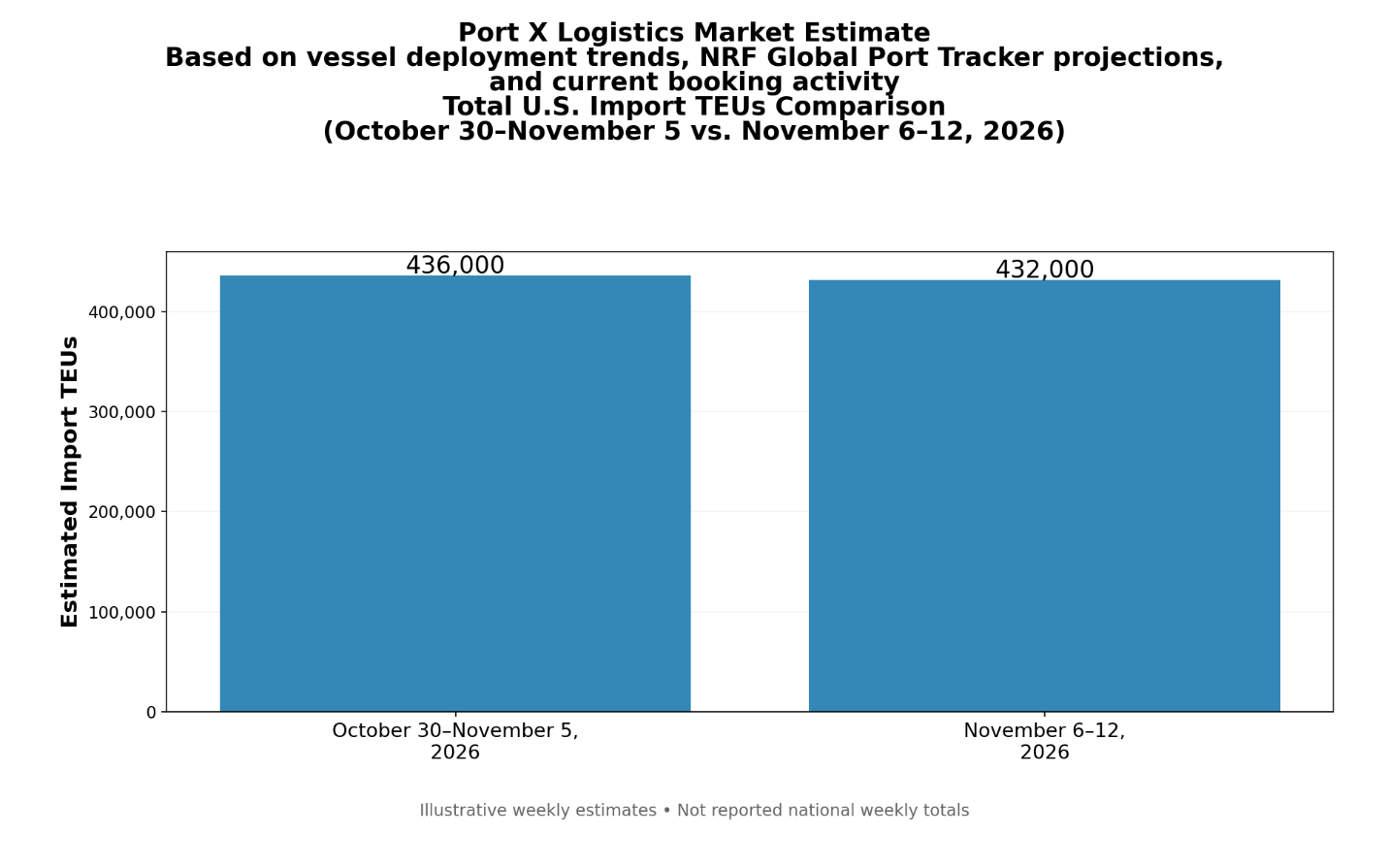
TEU volumes went down 0.91% over last week, with majority coming into Los Angeles 18.7%, Long Beach 15.3% and New York/New Jersey 15.6%.
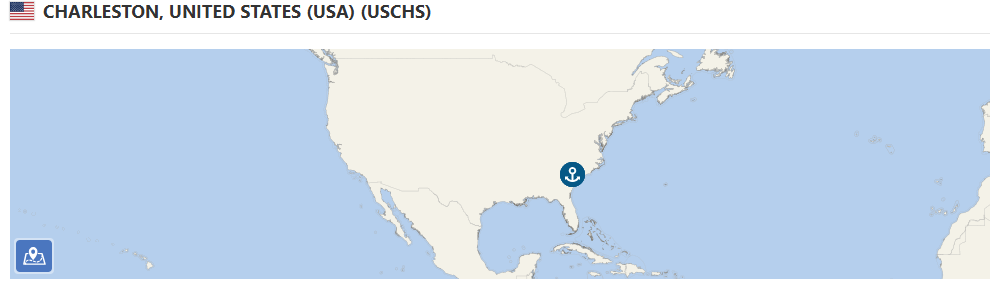
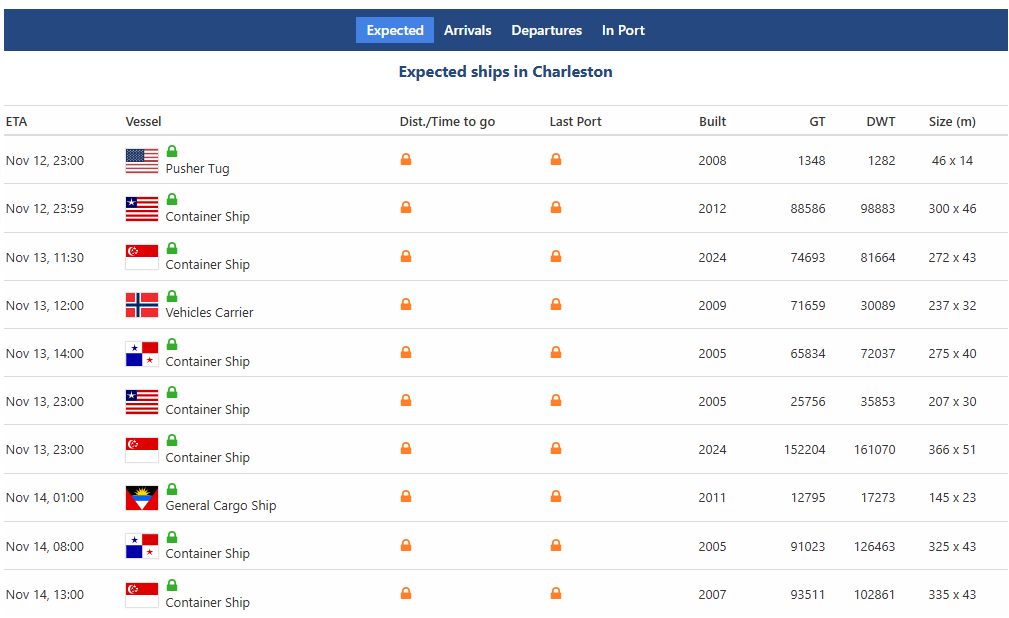
What’s happening at the ports and rails?: Charleston: A developing drayage dispute in Charleston is raising concerns about container movement and rising operating costs. On November 9th, approximately 130 truck drivers representing 15 companies reportedly stopped hauling containers between marine terminals and rail yards, citing compensation cuts of nearly 50% and increasing expenses for fuel, insurance and maintenance. The affected network typically handles 1,200 container moves daily, making it a critical connection to inland rail service. Coalition 18, representing local truckers, also raised safety concerns, warning that shrinking margins make equipment maintenance increasingly difficult. The South Carolina Ports Authority has acknowledged the concerns, and while negotiations have reportedly made progress, a final resolution and full return to normal operations have not been confirmed.
What It Means for Shippers
Even when marine terminals operate normally, drayage disruptions can delay container pickups, rail transfers and inland deliveries. Shippers moving freight through Charleston should confirm trucking availability, monitor rail connections and coordinate early with transportation partners to minimize potential delays and additional costs.
Did You Know? The Holidays are coming, but urgent freight doesn’t take a vacation. Thanksgiving dinner? Christmas morning? New Year's Eve? Enjoy the festivities — Port X – Expedited Team has the freight emergencies covered! While the world is busy making holiday plans, our dedicated expedited specialists are standing by 24/7/365, ready to jump into action when critical shipments simply cannot wait! From AOG emergencies and aircraft recovery to automotive production shutdowns, industrial hotshots, onboard couriers (OBC), air charters and time-critical first- and last-mile deliveries, we specialize in turning logistical nightmares into successful deliveries.
Need wheels RIGHT NOW? Our exclusive-use Sprinter Vans, Straight Trucks and Dry Vans are ready for the mission, backed by real-time shipment visibility, proactive communication and immediate proof of delivery. No holiday closures. No waiting until Monday. No “we'll get back to you after the long weekend.” Just a team that understands what's at stake when every minute matters! Because your holiday plans should involve family, friends and maybe a second helping of pie — NOT tracking down a missing shipment. When the unexpected happens, Port X – Expedited Team is ALWAYS on call!
📩 info@carrier911.com — Your direct line to 24/7/365 expedited support.