
2049 words 8 minute read - Let’s do this!
Just when the freight industry thinks it has a handle on one challenge, another development comes along to shake things up. This week, Washington is reconsidering controversial vessel fees, ocean carriers are staring down a potentially massive capacity surplus, trucking executives are warning that available equipment may remain tight, and the holiday shipping season is taking an interesting turn. Meanwhile, air cargo is bouncing back with a vengeance, and railroads are getting increasingly creative about winning freight away from the highways. And here's the twist: we're looking at a transportation market where ocean capacity could become abundant while domestic trucking remains difficult to secure. That's quite a combination! For shippers, the message is becoming increasingly clear. The cheapest rate isn't always the best transportation decision, and having options is more valuable than ever. Let's get into what's moving the market this week!
Here's a development that could provide some welcome breathing room for international shippers. The Office of the U.S. Trade Representative has proposed extending the suspension of controversial port fees targeting China-linked vessels for another two months, potentially pushing their return from November 10th, 2026, to January 10, 2027. The proposal would keep the measures suspended through January 9th while the United States and China continue negotiations over maritime trade and shipbuilding policies. The fees were designed to address concerns about China's dominance in commercial shipbuilding and international maritime transportation. However, their potential impact on shipping costs, vessel deployments and U.S. exporters has generated significant attention throughout the logistics industry. And here's the catch: the extension isn't final. USTR opened a public comment period, with submissions due October 30th. That leaves a very short window for maritime stakeholders to weigh in before the current suspension expires on November 9th. For ocean carriers, another two-month pause could provide additional planning certainty during the year-end shipping season. But a January expiration would also place renewed uncertainty directly into the period when many companies are evaluating transportation budgets and contract strategies for 2027. So while this development could delay additional costs, it doesn't eliminate the possibility that those costs may return.
What It Means for Shippers:
Keep an eye on the final USTR decision and any subsequent carrier announcements. The proposed extension could temporarily reduce the risk of additional vessel-related charges, but shippers should avoid assuming the fees have been permanently eliminated. Review contract language, potential surcharges and routing alternatives before finalizing 2027 ocean transportation budgets.
For much of the past few years, the container shipping industry has been focused on disrupted routes, longer voyages and limited available capacity. Now, the conversation is beginning to change dramatically. During an October 26th market outlook presentation, maritime consultancy Drewry warned that the container shipping industry could face substantial overcapacity in 2027 and 2028 as newly built vessels enter service and more carriers return to the Suez Canal. Drewry projects net container shipping capacity growth of approximately 8.8% in 2027, followed by 12.1% in 2028. That's a significant amount of additional vessel space entering a market where cargo demand may not grow nearly as quickly. And there's another important factor. As carriers gradually resume shorter routes through the Red Sea and Suez Canal, vessels that were previously tied up on lengthy voyages around Africa become available for additional service. Drewry estimates that a broader return to Suez could release approximately 1.6 million TEUs of effective capacity in 2027, on top of the additional space created by new vessel deliveries. More ships, shorter voyages and potentially softer demand? That's a combination that could put downward pressure on ocean freight rates. But don't start celebrating lower transportation costs just yet - Ocean carriers still have tools to manage excess capacity, including slower sailing speeds, vessel idling and service adjustments. And geopolitical disruptions could change the outlook quickly.
What It Means for Shippers
The 2027 ocean contract season could present valuable negotiating opportunities. Monitor capacity additions and service reliability rather than focusing exclusively on current spot rates. Greater vessel availability may improve pricing leverage, but flexible routing options and dependable inland transportation will remain essential to controlling total delivered costs.
Here's one of the more interesting developments in the domestic freight market: trucking capacity is tightening, but not necessarily because freight demand is surging. During recent industry discussions, Knight-Swift CEO Adam Miller highlighted how stricter regulatory enforcement, changing carrier qualification standards and the ongoing exit of smaller trucking companies could reshape the industry's next recovery. The traditional trucking cycle has been fairly predictable. Freight demand improves, rates increase, new carriers enter the market, capacity expands and eventually pricing falls again. But this time, the recovery may look different. Higher insurance, equipment and operating costs are making it harder for smaller carriers to survive. At the same time, federal enforcement of commercial driver's license requirements and other safety regulations is reducing access to certain segments of available capacity. More selective carrier-screening practices could also make it harder for newly established trucking companies to secure freight. The result? The number of trucks available to accept shipments could remain constrained even if the overall economy isn't generating a major freight surge. That's an important distinction for transportation buyers who have become accustomed to finding last-minute trucks at competitive prices. A softer freight market doesn't automatically mean unlimited capacity. And as the industry moves toward the holiday season, regional demand changes, winter weather and equipment imbalances could make certain lanes particularly challenging.
What It Means for Shippers
Don't rely exclusively on spot-market availability when planning critical shipments. Strengthen relationships with dependable carriers, communicate upcoming volume changes and evaluate capacity by lane rather than assuming conditions are identical nationwide. For importers, coordinating drayage, transloading and outbound trucking early can help prevent an available container from becoming a delayed delivery.
The holiday shipping season is almost here, but one of America's largest parcel carriers is approaching it a little differently this year. On October 27th, UPS reported stronger-than-expected third-quarter earnings and raised its full-year financial outlook, even as it continues reducing the amount of lower-margin freight moving through its network. A major part of that strategy involves scaling back Amazon shipments while concentrating on more profitable customers and services. UPS expects its average daily package volume to decline approximately 1.3% year over year during the fourth quarter, while domestic revenue is projected to increase around 3%. In other words, fewer packages could still mean more revenue. That's quite a change from the traditional race to move as many parcels as possible!
UPS also expects package volume to increase roughly 25% from the third quarter to the fourth quarter as seasonal demand builds. The company plans to hire approximately 100,000 seasonal employees while relying more heavily on automation and network efficiency. For the broader logistics industry, this development reflects an important shift in transportation strategy. Carriers are increasingly focused on profitable freight, customer mix and operational efficiency rather than simply maximizing volume. And that shift can influence pricing, service options and capacity allocation throughout the distribution network.
What It Means for Shippers:
Holiday shipping capacity shouldn't be evaluated by package volume alone. Review carrier commitments, seasonal surcharges, pickup schedules and delivery requirements now. Companies moving inventory into distribution centers should also coordinate inbound truckload and intermodal shipments early to avoid last-minute congestion as holiday fulfillment activity accelerates.
Railroads aren't waiting around for shippers to discover intermodal transportation on their own anymore. They're actively looking for freight they can move off the highways. CSX recently described a more hands-on approach to winning new intermodal business, including confidentially reviewing customers' truckload shipping data to identify lanes where rail transportation could offer competitive service and cost advantages. Rather than simply offering a general intermodal rate, the railroad is evaluating specific shipping patterns and showing customers how rail could fit into their existing transportation networks. It's a smart approach in a market where trucking availability is tightening and operating costs remain elevated. And the opportunity extends beyond traditional consumer goods. CSX reported a 7% year-over-year increase in chemical volumes during the third quarter, supported in part by freight shifting from highway transportation to rail. The company also sees potential opportunities involving forest products, petroleum-related freight and other commodities that have historically relied heavily on trucks. Of course, rail isn't the right solution for every shipment. Shorter distances, urgent deliveries, specialized equipment requirements and limited terminal access can make direct trucking more practical. But for predictable, longer-distance freight, the economics are becoming increasingly attractive. And that creates opportunities for transportation providers capable of connecting rail movements with reliable local drayage and final delivery.
What It Means for Shippers:
Take a fresh look at long-haul truckload lanes that could benefit from intermodal service. Compare total door-to-door costs, including terminal handling, drayage and delivery requirements. The greatest savings may come from combining rail efficiency with dependable trucking capacity at both ends, rather than choosing one transportation mode exclusively.
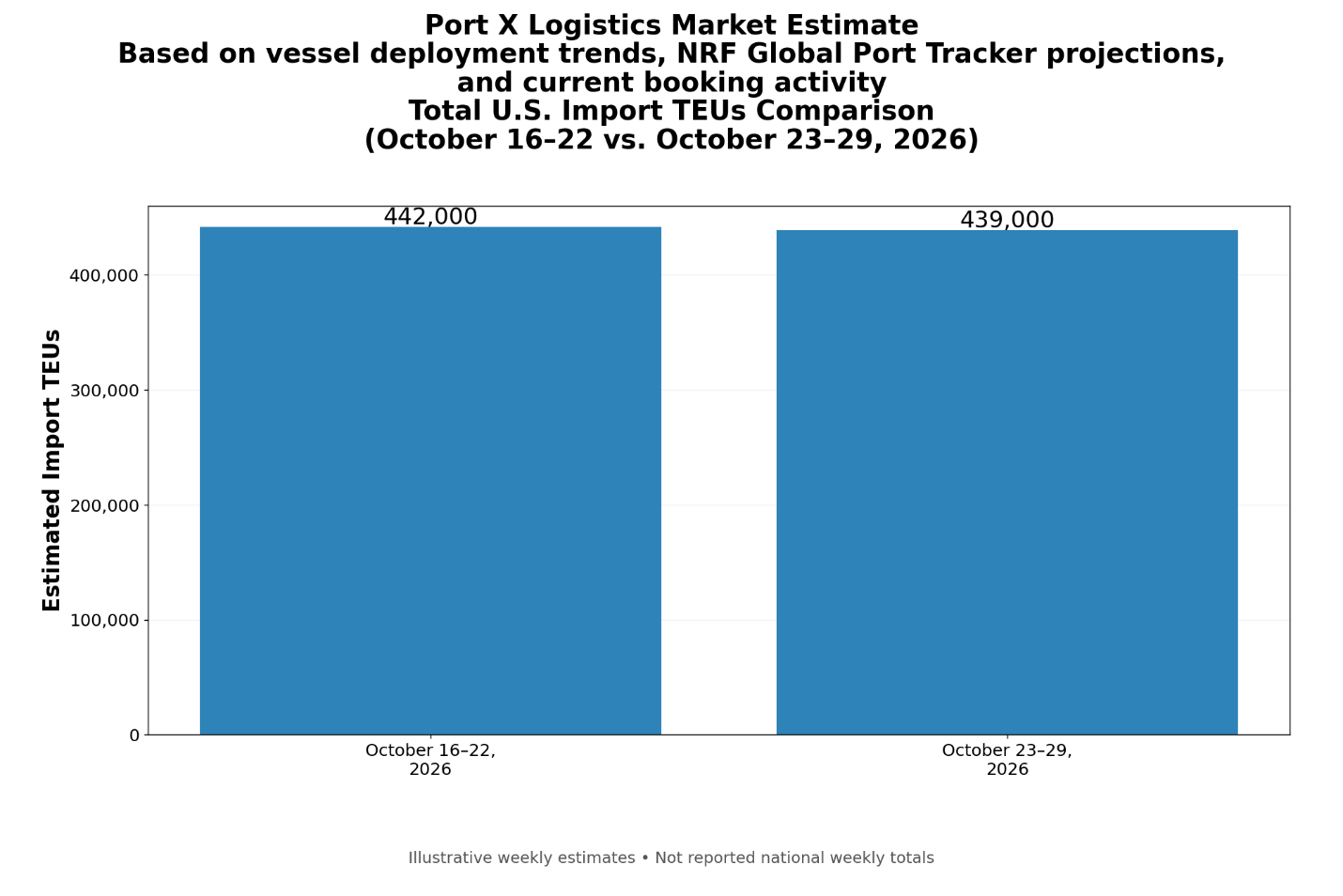
TEU volumes went down 0.67% over last week, with majority coming into Los Angeles 18.9%, Long Beach 15.5% and New York/New Jersey 15.4%.
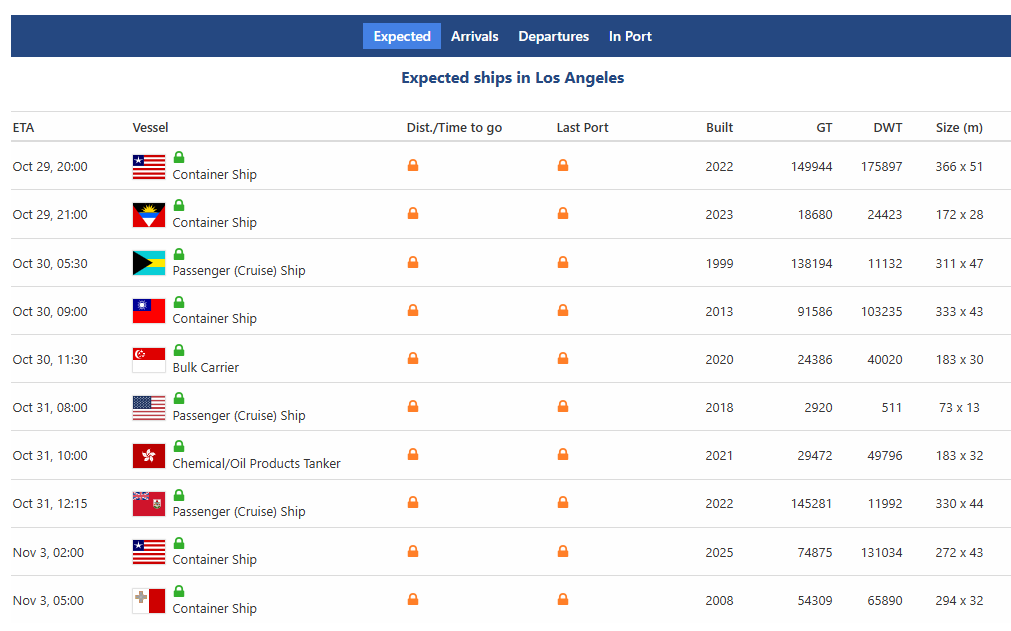
What’s happening at the ports and rails?: LA/LGB: Southern California's ports are breaking cargo records, however there is a potential labor disruption could throw a wrench into the works. Approximately 250 security workers represented by ILWU Local 26 have authorized a strike that could begin Sunday, November 1st, at 5 p.m. The workers provide security across six terminals handling more than half of the LA/LB port complex's cargo, including approximately 85% of Long Beach's volume. While the group represents a small percentage of the waterfront workforce, the impact could be enormous if thousands of other dockworkers honor their picket lines. Negotiations have been ongoing since July 2025, and both sides have yet to reach an agreement. Important: This is a strike authorization, not an active work stoppage. Port officials remain hopeful a deal can be reached before Sunday.
What It Means for Shippers: If you have containers arriving or awaiting pickup at LA/LB, now is the time to get ahead of potential disruptions! Confirm terminal appointments, coordinate drayage capacity and monitor developments closely. A little preparation today could save a whole lot of headaches next week.
if the LA/LB strike goes ahead, it could seriously disrupt rail connections leaving the ports, even if the railroads themselves aren't on strike. The biggest concern is on-dock rail, where containers transfer directly from marine terminals onto trains. If terminal operations stop because other ILWU workers honor the security workers' picket lines, those rail-loading operations could stop or slow dramatically The distinction is important: a port strike wouldn't automatically shut down Union Pacific or BNSF rail service across Southern California. But it could prevent containers from reaching departing trains.
LA/LB already has a significant rail backlog before any strike begins.
As of October 26, 2026: 35,688 containers Awaiting on-dock rail service at LA/LB. 10,562 had already been waiting nine days or longer.
How it could affect inland rail shipments
| Shipment situation | Potential impact |
|---|---|
| Containers waiting for on-dock rail | High risk of additional delays |
| Containers already loaded onto departing trains | Lower direct risk, depending on whether trains can depart |
| Containers moving through off-dock rail facilities | Could face delays getting out of affected marine terminals |
| Trains are already moving inland | Generally, should continue operating |
The threatened strike could begin on Sunday, November 1st, at 5 p.m. Pacific. Negotiations are ongoing, and no work stoppage has been confirmed
Did You Know? With a potential LA/LB port strike looming, the last thing shippers need is another transportation headache! While labor negotiations continue, Port X is already helping customers prepare for whatever comes next. Our asset-based LA/LB drayage team brings dependable capacity, competitive transload rates, secure yard space, flexible storage and real-time OpenTrack visibility to keep you one step ahead. And don't forget our No Demurrage Guarantee with 72-hour dispatch for qualifying shipments!
Because when terminals are busy and uncertainty is high, having a solid game plan makes all the difference. We can't control a potential work stoppage, but we CAN help you prepare for one! Less scrambling, smarter planning and more freight moving when operations allow. Got containers headed through LA/LB? Let's get ahead of the what-ifs! letsgetrolling@portxlogistics.com